

What My Dog Taught Me on a Sniffing Walk 🐕🦺

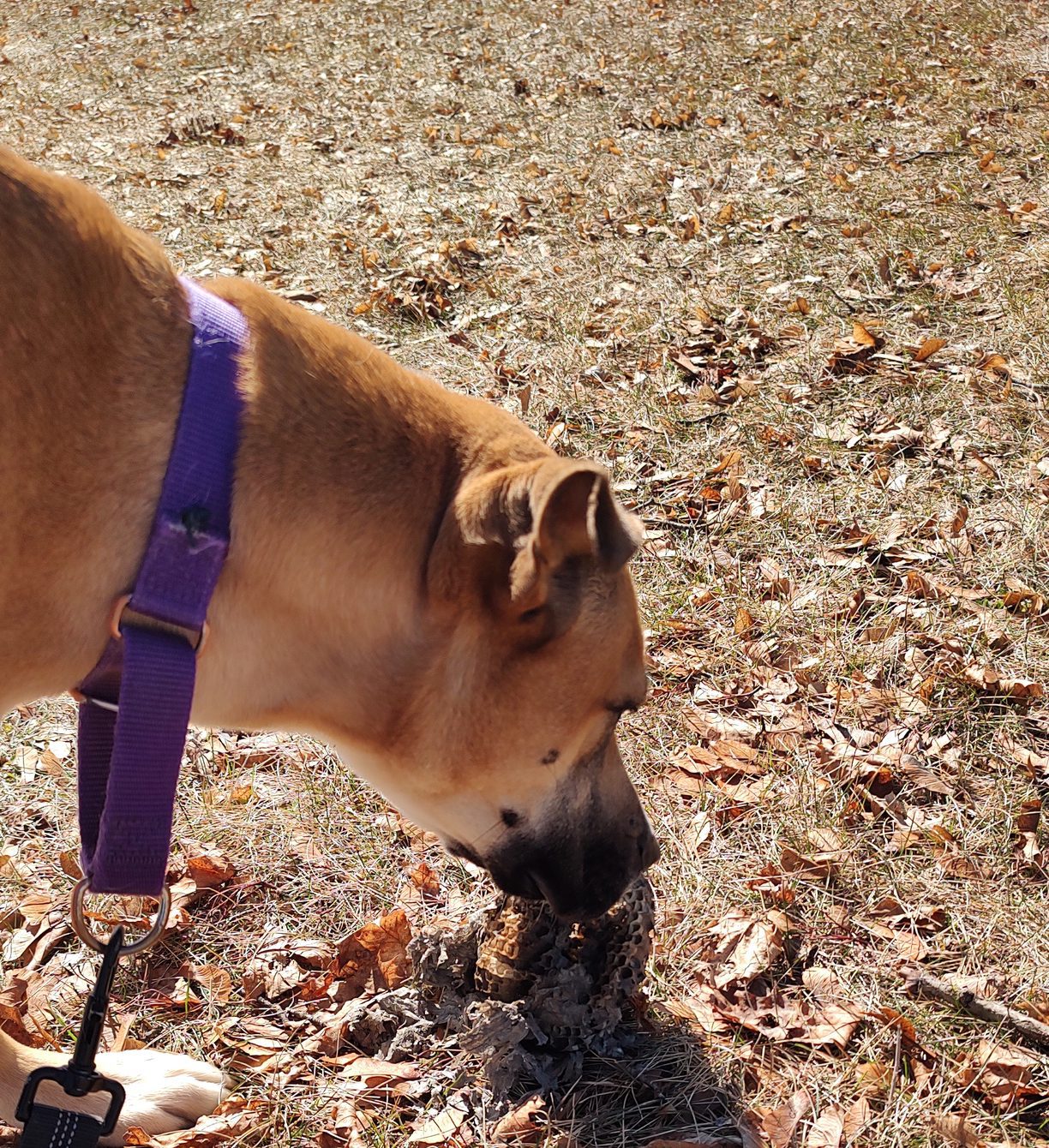
We have an almost 2½-year-old dog named Delaney that we adopted from the local humane society. I like to take her on many walks because she needs a good amount of exercise. She’s adopted, so we don’t fully know what she is, but mostly she is a Black Mouth Cur. Yes, that’s a real dog breed, even if most people haven’t heard of it. They’re southern farm dogs that are used to having jobs (she does carry my daughter’s lunchbox home from school) and doing a lot of active work, so I feel bad if I’m not taking her on a couple of longer walks every day.
Now, anyone who has ever walked with me knows I have what you might call an East Coast stride. What is that? It’s walking to your destination with a little urgency. I walk fast, and I definitely don’t like stopping. That’s the worst part.
Delaney’s walking style, on the other hand—even when it’s subzero—is more like
“What’s the rush? Ohhhh, did you smell that smell 20 yards in the other direction? Let’s go investigate that!”
Or let’s smell this large stick that we already smelled on our other two walks… just in case.
And of course this drives me nuts.
Ironically, my Instagram feed picked up on my frustration. I saw a post explaining that dogs actually tire themselves out more through sniffing than through running. Some studies suggest that about 15 minutes of intense sniffing can burn as much mental energy for a dog as a one-hour walk. It also lowers their cortisol and pulse.
But when we constantly pull them away because we want to keep moving, we’re actually denying them one of their primary biological drives. It spikes their cortisol and frustration and can lead to more hyperactivity.
That made me rethink the way I was approaching our walks.
It forced me to slow down and let Delaney take more of the lead. I was trying to get to a place she wasn’t ready to go to yet. There was work to be done where we were standing. She needed to process what was here and who had been here.
To her, the walk wasn’t about getting back to the house in a certain amount of time.
It was about what happened along the way.
We had different objectives, and I was forcing mine on her because, in my mind, exercise meant movement.
But maybe exercise for her meant exploration.
That realization made me think about the work coaches do with clients and supervisors do with the people they lead.
One thing you learn early in coaching is that the client leads the process. You are in a support role. You help guide, but you don’t steer.
I often tell people that the moment you take the microphone away from your employee or your client, you’ve made the conversation about you instead of them.
Delaney’s job is to sniff and explore.
My job is to guide. To keep her safe. To occasionally lead her to places her nose never would have taken her on its own.
But the pace of discovery?
That belongs to her.
And it’s the same when you’re supporting clients, employees, or athletes. Your role isn’t to rush them toward your destination. It’s to create the conditions where they can explore, test ideas, and learn in a space that feels safe.
Sometimes that means letting them wander a little.
Sometimes it means stepping in when they start heading toward the road.
But most of the time it means trusting the process and letting them follow what matters to them.
Because helping people grow isn’t about dragging them somewhere faster.
Sometimes it’s about being patient enough to let them “sniff” their way there.
Steve