

Are We Forgetting How to Ask Questions… or Learning Again 🤔❓

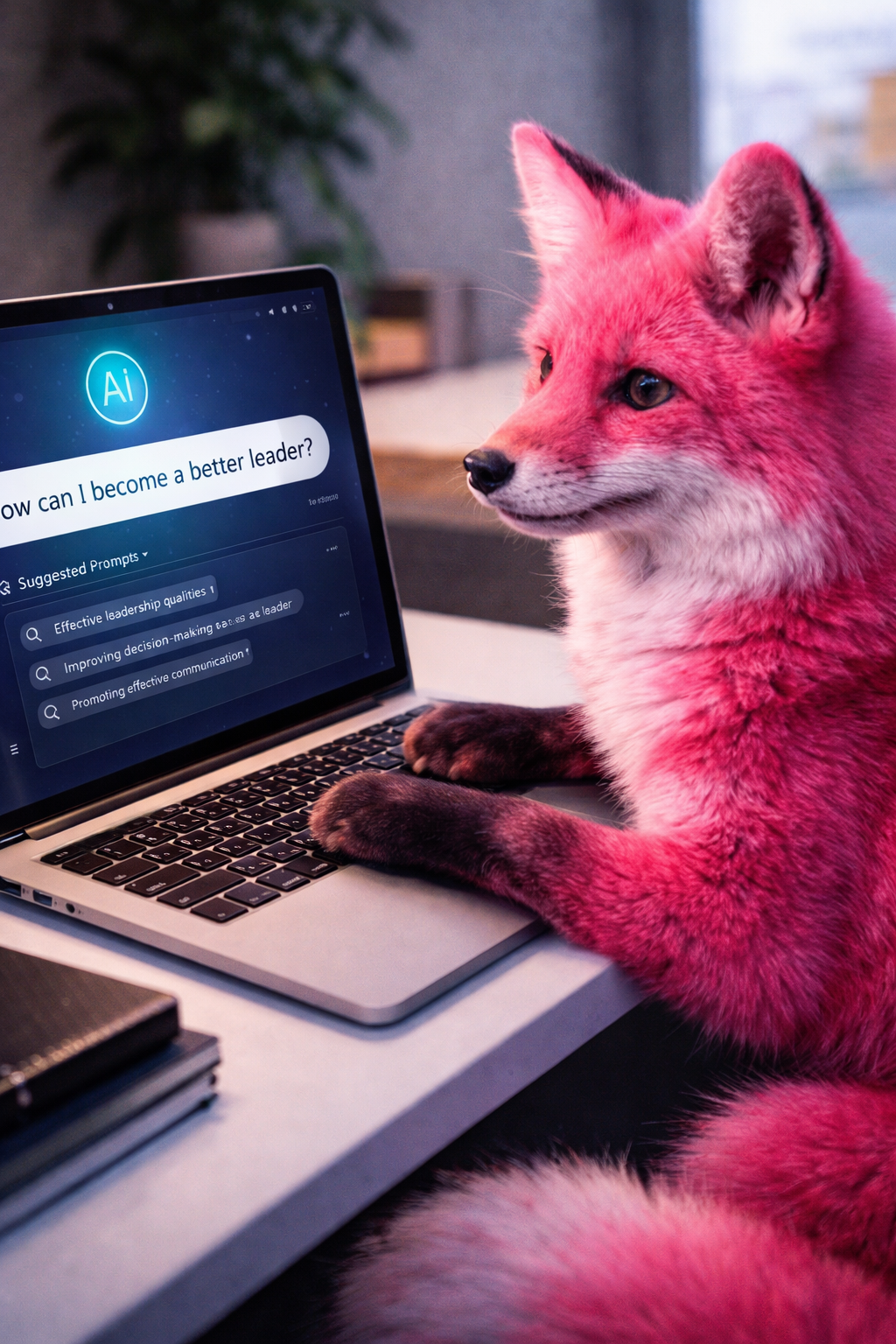
This week I found myself reflecting on something.
I think I’ve been asking more questions lately than I did a few years ago.
Why is that?
A big part of it is the emergence of AI. Along with that, much of my work, both professionally and in my own business, can be fairly individual. There are fewer natural moments to ask others questions throughout the day.
And if I’m being honest, there’s also something else at play.
A hesitation.
With everything people have going on, it can feel like asking questions, especially small or exploratory ones, might not be the best use of someone else’s time. You start to wonder:
Am I bothering them?
Did I explain this clearly?
Have I already asked too many questions this week?
As someone whose work often revolves around asking questions and staying curious, I find it interesting, and a bit unfortunate, how we are socialized out of this behavior over time.
Kids ask questions constantly. About everything.
Some estimates suggest that young children ask hundreds of questions a day, while adults may ask only a handful.
Why is it like this?
What would happen if a unicorn and a T-rex had a baby?
As a parent, I’ve seen this firsthand. The curiosity is endless, and it’s a great thing. It builds awareness, understanding, and confidence in how they engage with the world.
But over time, something shifts.
We start to internalize the idea that asking too many questions is annoying. That we should figure things out on our own. That questions signal a lack of knowledge rather than a desire to learn.
And slowly, we stop asking as many.
That’s where my recent reflection comes in.
Because I think AI may be changing that.
There’s something different about asking a question when there’s no social pressure attached. No concern about interrupting someone. No fear of being judged for not knowing.
Just a space where you can ask.
And interestingly, research shows that when people are placed in environments that feel responsive and low-pressure, such as interacting with an AI system, they tend to ask more questions and explore ideas more deeply.
And what I’ve noticed is that it’s not just about asking more questions. It’s about asking better ones.
Using AI has forced me to think more intentionally about what I’m asking and how I’m asking it. In many ways, it feels similar to coaching. The quality of the response is often tied to the quality of the question.
And that’s a skill.
A skill that takes practice.
A skill that many of us stopped developing over time.
Of course, there are valid concerns about AI and its broader impact. Some might worry that people will stop engaging with each other and rely too heavily on technology.
But my experience has been the opposite.
I’ve found myself bringing better questions into conversations with others. Expanding on ideas. Using AI as a starting point, not an ending point. Even generating questions that I bring into team discussions and coaching sessions.
In that way, it has actually made my interactions with others richer, not more distant.
Maybe one of the unintended benefits of AI is that it helps us reconnect with something we were once naturally good at.
Asking questions.
Freely. Frequently. Without hesitation.
Like we did when we were kids.
Go Blue!
Steve